Fixed Speed & Variable Speed Screw Compressors: Which One Is Right for You?
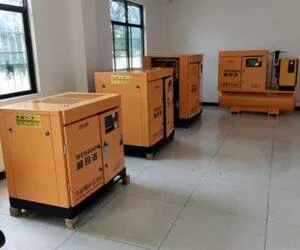
Fixed Speed & Variable Speed Screw Compressors: Which One Is Right for You?
Are you trying to decide between a fixed speed and a variable speed screw compressor for your business? This in-depth comparison will help you make an informed decision by exploring the pros, cons, applications, costs, energy efficiency, maintenance requirements, control options, speed range, noise levels, and power consumption of both options.
Fixed speed screw compressors offer simplicity and lower upfront costs, while variable speed screw compressors provide greater energy efficiency and adaptability. The best choice depends on your specific needs and operational requirements.
Join me as we dive into the details of fixed speed and variable speed screw compressors to help you determine the perfect fit for your business.
Pros and Cons
Fixed Speed Screw Compressors
Pros:
- Simpler design
- Lower upfront cost
- Reliable performance
- Suitable for constant demand
Cons:
- Less energy-efficient
- Limited adaptability
- Higher long-term operating costs

Variable Speed Screw Compressors
Pros:
- Greater energy efficiency
- Adaptable to varying demand
- Lower long-term operating costs
- Quieter operation
Cons:
- More complex design
- Higher upfront cost
- Might not be ideal for constant demand

Upfront Cost
Fixed frequency screw compressors usually have lower initial costs because their design is simpler and requires fewer components. This makes them an attractive option for businesses with budget constraints or for those looking for a more straightforward solution without the need for advanced features.
Variable frequency screw compressors, also known as VSD rotary screw compressors, generally have higher upfront costs due to their more complex design, additional components, and advanced control systems. However, this investment can pay off in the long run due to their potential energy savings and improved performance in applications with variable air demand.
Energy Efficiency
Fixed frequency compressors run at a constant speed, which means that they consume the same amount of energy regardless of the actual air demand. This can result in energy waste if the air demand fluctuates, making them less efficient in situations where the air usage varies throughout the day or week.
VSD compressors are designed to optimize energy efficiency by adjusting their motor speed according to the air demand. This means that they consume less energy during periods of lower demand and can ramp up their speed when the demand increases, making them ideal for applications with varying requirements and helping businesses save on energy costs.
Application Scope
Fixed speed compressors are best suited for applications with constant air demand, such as manufacturing plants with steady production schedules, workshops that run consistently, or businesses that require a constant air supply throughout their operating hours.
Variable speed compressors are more versatile and suitable for applications with fluctuating air demand. This includes businesses with varying production schedules, facilities that experience seasonal fluctuations in air usage, or operations that require different air pressures and volumes at different times.
Maintenance Requirements
Fixed speed compressors generally have lower maintenance requirements due to their simpler design and fewer components. This means that they might have a lower risk of component failure, require fewer replacement parts, and be easier to maintain, which can save time and resources in the long run.
VSD rotary screw compressors may require more maintenance due to their additional components, such as variable frequency drives, and more complex control systems. This might mean more frequent servicing, a higher risk of component failure, and potentially higher maintenance costs. However, their increased efficiency and potential energy savings can help offset these costs.
Control Options
Fixed speed compressors have limited control options since they operate at a constant speed. This can make them less flexible in terms of adapting to changing air demand, which might not be ideal for situations where the air usage fluctuates throughout the day or week.
Variable speed compressors offer more control options, allowing them to adjust their motor speed according to the air demand. This makes them more versatile and suitable for fluctuating requirements, allowing businesses to optimize their air supply and energy consumption more effectively.
Noise Level
Fixed frequency compressors tend to produce more noise due to their constant motor speed, which can lead to a louder working environment. This might not be ideal for facilities where noise pollution is a concern or for businesses that require a quieter workspace for their employees.
Variable frequency compressors generally produce less noise, as their motor speed adjusts to the air demand. This results in quieter operation during lower demand periods and a more comfortable working environment for employees, making them a better choice for noise sensitive applications.
Power Consumption
Fixed speed screw compressors consume power at a constant rate, regardless of the air demand. This means that during periods of low air usage, they can still consume the same amount of energy as during peak demand, potentially leading to higher power consumption and increased energy costs.
Variable speed screw compressors, on the other hand, adjust their motor speed according to the air demand, which allows them to consume power more efficiently. By reducing their motor speed during low demand periods, they can save energy and lower power consumption, ultimately leading to cost savings for businesses.
In Conclusion
Both fixed speed screw compressors and variable speed screw compressors have their unique advantages and disadvantages, depending on the specific application, budget, and requirements. Fixed frequency compressors offer lower upfront costs and simpler maintenance but may be less efficient and flexible in terms of control options and power consumption. Variable frequency compressors, while having higher upfront costs and potentially more maintenance requirements, provide improved energy efficiency, versatility, and noise reduction.
When choosing between fixed and variable speed compressors, it’s crucial to consider your specific needs, such as air demand fluctuations, energy efficiency goals, noise level requirements, and maintenance capabilities. By understanding the pros and cons of each type, you can make an informed decision that best suits your business and application.
12 Key Benefits of a Rotary Screw Air Compressor for Your Business